The phrase garage door opener how to program covers pairing a handheld remote, car button, keypad, or universal control. Most openers use a learn button on the motor unit. The right steps depend on the brand, control type, battery, and vehicle system. Always test the door safely after pairing.
Table of Contents
- How does garage door opener programming work?
- How do you program a standard garage door remote?
- How do you program a car’s built-in garage door button?
- How do you program a garage door keypad?
- How do you program a universal garage door remote?
- What should you do when a programmed remote does not work?
- How can you reset garage door remotes and keep the opener secure?
How does garage door opener programming work?
Garage door programming teaches the motor unit to accept a control signal. The opener saves that signal in its memory. When the remote or keypad sends the right signal, the opener runs the motor. This helps limit entry to people with approved controls.
What the learn or program button does
The learn or program button is often on the opener motor. Look near the hanging antenna wire or light cover. It may have a colored light beside it. Pressing the button puts the opener into a short pairing mode. The opener then waits for a remote, keypad, or car button.
The light pattern and timing can change by brand and model. Check the owner’s manual before you begin. The manual also shows which remotes and keypads fit the opener. Some smart garage door openers use an app along with a normal remote.
A remote sends a radio signal. A keypad sends a code after you enter it. A car button may learn the remote signal first. It then sends that signal later. These controls do not always pair in the same way.
Which remote, opener, and vehicle controls are compatible
Compatibility depends on the opener brand, model, radio system, and age. A remote that looks right may still use a different signal. The car must also support the opener’s signal type. Your vehicle manual can show whether you need a separate compatibility bridge.
Portsmouth Garage Door Repair can help Portsmouth homeowners choose a control for an existing opener. Local help can save time when the model label is hard to read. It also helps when the manual is missing or several controls have stopped working. The right match helps protect garage door safety and avoids failed setup attempts.
How do you program a standard garage door remote?
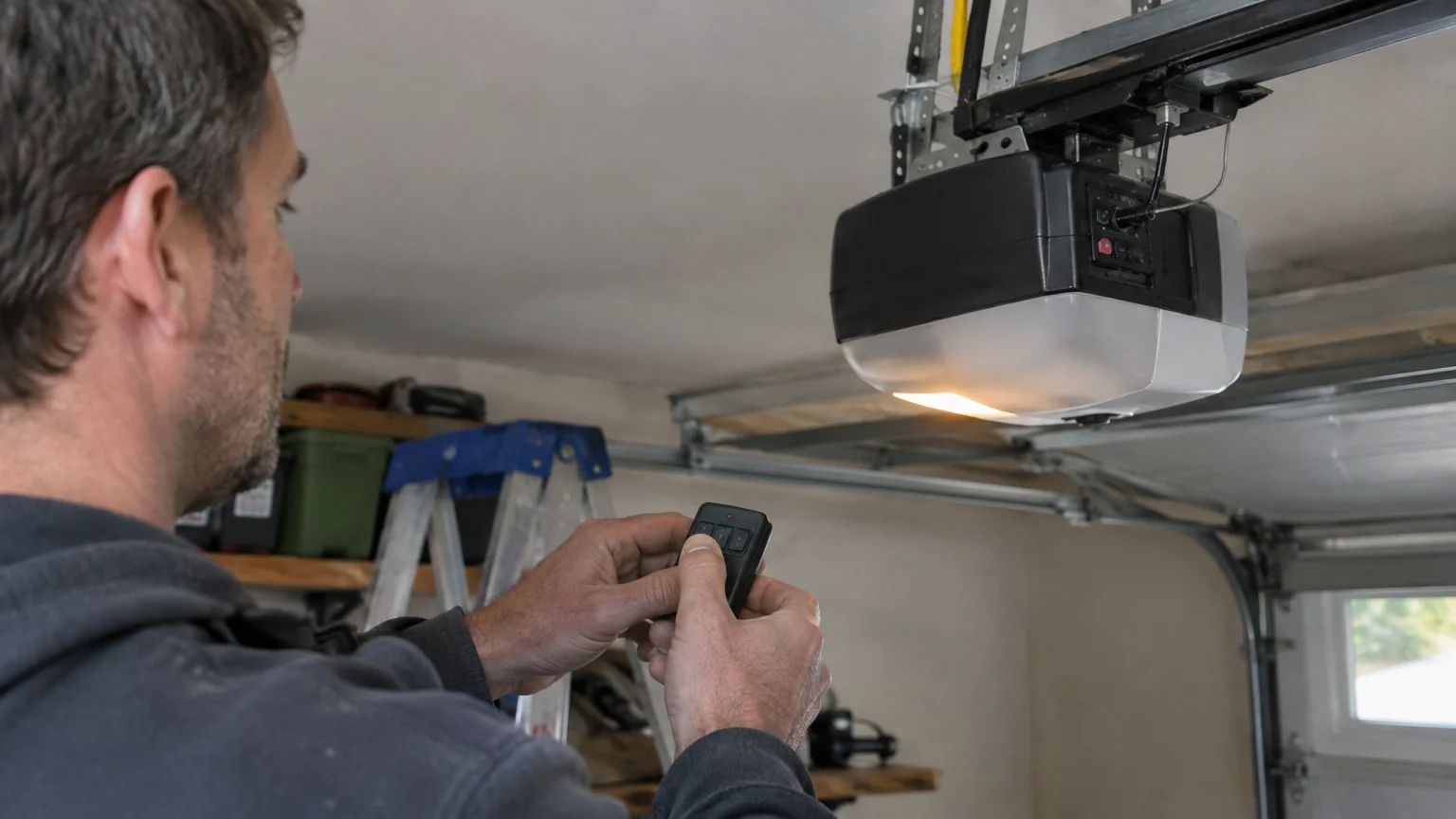
A standard remote is usually paired with the opener’s learn button. You then press the chosen button on the remote. You do not need to work on springs, cables, or other loaded parts. Programming is usually safe when you follow the manual and keep people away from the moving door.
Steps for pairing a remote with the opener
- Find the opener model information. Look on the motor unit, rail, or remote. Write down the brand and model before choosing instructions.
- Check the remote battery. Install the correct battery. Make sure it sits firmly in the holder. A weak battery can make pairing fail.
- Place the remote near the opener. Clear the door area first. Keep children, pets, and vehicles away from the opening.
- Press the learn or program button. Check the manual to see how pairing mode looks. Do not press random buttons again and again.
- Press the chosen remote button. Hold it as the manual says. The opener light should show that the signal was saved.
- Let pairing mode end. Some systems leave this mode after a short time. If it ends early, check the model instructions before trying again.
How to confirm the remote works safely
Stand where you can see the whole door. Press the remote once and watch the door start. Never stand below the door. Do not drive under it while testing. Press the control again if the manual says it should stop or reverse the door.
Keep the photo-eye safety sensors clear. These sensors sit near the floor on each side of the opening. If the door will not close, look for blocked lenses, loose wires, or poor alignment. Never bypass the sensors. Portsmouth Garage Door Repair can inspect the opener when the remote pairs but the door still acts wrong.
How do you program a car’s built-in garage door button?
A car’s built-in garage door button often needs the handheld remote during setup. The vehicle first learns the remote signal. The opener may then learn the car button. The exact order depends on the vehicle and opener. Your vehicle manual gives the correct button order.
Why the original remote may be needed
Many vehicle systems copy the signal from a handheld remote. The remote usually needs to be close to the car buttons. A good battery matters because the vehicle cannot learn a weak signal well.
Some newer vehicles use another system. They may connect through a built-in method or need a separate bridge. A dealer, opener maker, or trained garage door technician can confirm the setup. Guessing may erase a working control or confuse the pairing process.
How to pair the vehicle buttons with the opener
Park the vehicle outside the door’s path. Keep the engine off unless the vehicle manual says otherwise. Follow the vehicle instructions to train the chosen button with the handheld remote. The light often changes when the car has learned the signal.
Next, use the opener’s learn button if direct pairing is needed. Press the chosen car button as the opener manual says. Test it with the door fully visible. The button should start or stop the opener without delay. The safety sensors must still work normally.
A failed setup may come from a weak battery, an unsupported opener, or a vehicle memory problem. A smart opener may also need account access or app setup. Garage Door Opener Repair can help when a car button works only sometimes, loses its pairing, or operates another door by mistake.
How do you program a garage door keypad?
A garage door keypad is set up through the opener’s learn mode. You then choose a personal entry code. The code should be easy for your household to remember but hard for others to guess. Test the keypad while the door area is clear.
Setting or changing a keypad code
Read the keypad and opener manuals first. Older keypads may use small switches. Newer models may use a learn button and code sequence. The steps are not the same for every model, so the model number matters.
Choose a code that does not use your address, birth date, or another public detail. Enter it only when the keypad is ready. If the light does not respond as expected, stop and check the manual. Pressing many combinations can make the process harder to follow.
A code change may remove an old code or add another one. Learn which result applies before you begin. If a former resident, tenant, worker, or family member knows the code, changing it is a wise security step.
Testing the keypad and securing access
Test the keypad from a safe place with the full door in view. Enter the code and press the open or enter button as directed. Make sure the door starts moving. Then test closing with no person, pet, or item below it.
Keep the keypad cover closed when it is not in use. Wipe dirt and moisture away with a soft, dry cloth. Do not spray cleaner into the buttons. If the keypad works only nearby, check the battery and inspect the opener before blaming the code.
A keypad that opens the door without the right code needs quick attention. The code may not have saved, or the keypad may have a fault. A technician can check the control, opener memory, wiring, and security settings without touching spring parts.
How do you program a universal garage door remote?
A universal garage door remote works with some opener brands and models. It does not work with every system. Check the package or manual for supported openers. Confirm the match before trying to pair the remote.
Checking compatibility before programming
Find the opener brand and model on the motor unit. Compare it with the universal remote’s list. The opener’s age, radio frequency, security system, and learn-button color may matter. A remote from the same brand may still use a different security system.
The remote battery should be new or known to work. Remove old batteries safely. Use the type shown in the remote manual. Keep the remote away from other controls during setup. This makes it easier to see which signal the opener saved.
One universal remote may control more than one door. Pair each button with the correct opener. Labeling the buttons can help prevent mistakes in a shared garage or small business.
Common pairing methods for universal remotes
Many universal remotes use a learn-button method like the original remote. Others use a brand code, switch setting, or both. Follow the manual for the exact opener. The method can change even between models from one brand.
After pairing, test the remote from a few safe places. The door should respond in a steady way. A short range, delayed response, or another opener moving may point to interference, a poor match, or a memory problem.
Do not open the motor housing or change wiring to make the remote work. These actions can create shock, control, and security risks. If the remote is listed as compatible but still fails, Garage Door Opener Repair can test the remote and opener together. Portsmouth Garage Door Repair serves property owners in the main Portsmouth area, including West End and South End, as well as nearby communities that need help choosing or setting up opener controls.
What should you do when a programmed remote does not work?
Start with simple checks before assuming the opener needs major repair. A dead battery, blocked sensor, locked wall control, or weak signal can stop a programmed remote. If the door is heavy, crooked, noisy, or stuck, the fault may be in the door hardware instead.
Battery, range, and signal troubleshooting
Replace the remote battery with the correct type. Check for rust, a bent contact, or a loose battery cover. Try the wall control if it is safe. If the wall control works but the remote does not, focus on the remote, pairing, or signal range.
Make sure the opener has power. Check whether the motor light turns on and whether other controls respond. Keep the remote away from metal objects, thick walls, and possible signal interference. A keypad may also need a fresh battery and clean buttons.
Look at the photo-eye sensors near the floor. Both lights should show normal alignment according to the manual. Clear leaves, boxes, and cobwebs from the sensor area. Never move, cover, or bypass the sensors to force the door shut.
When the opener, remote, or wiring may need repair
A remote may pair but still fail if the opener receiver is damaged. Loose low-voltage wires, a failed wall control, worn gears, or a control board fault can also stop the system. A door that hums, reverses, lifts unevenly, or will not move may need more than programming.
Do not adjust springs, lift cables, or bottom brackets during remote troubleshooting. These parts can hold strong force. They can cause severe injury if they move without warning. A trained professional uses the right tools and checks the door balance before working on loaded parts.
Garage Door Opener Repair is worth considering when basic checks do not solve the problem. If the door is off track, damaged, or unsafe, another suitable repair service may be needed. Portsmouth Garage Door Repair can help find whether the fault is in the control, opener, wiring, or door.
How can you reset garage door remotes and keep the opener secure?
Resetting an opener can remove stored remotes, keypads, and car controls. It can help after a lost remote, a change in occupants, or a security concern. The reset method differs by model. Confirm what the reset will remove before starting.
When to erase old remotes and codes
Erase old controls when a remote is lost or when someone who should not have access knows the keypad code. A reset may remove every stored control instead of only one. Gather the current remotes first. Plan to pair approved controls again afterward.
After a reset, test each approved remote, car button, and keypad. Remove unknown controls from your list. Store spare remotes in a safe place. For smart openers, review user accounts, shared access, and app permissions too.
Good care also helps. Replace weak batteries and keep sensor lenses clean. Watch for changes in range or response. A door that needs many commands may have an opener or wiring fault. Routine Garage Door Maintenance can help find problems before the door becomes hard to secure.
When professional garage door opener help is the safer choice
Professional help is safer when the opener has no power, the door is stuck, the rail is damaged, or wiring looks loose. It is also needed when springs, cables, or bottom brackets may be involved. These parts are under force and should not be adjusted through a home how-to guide.
A qualified technician can match a remote, check the receiver, inspect the safety sensors, and test door movement. The final cost is confirmed on a quote after the needed work and parts are clear. Opener repair is often a smaller job than replacing a full door, but access, damage, and urgency affect the work.
Frequently Asked Questions
Can a homeowner program a garage door remote without professional help?
Yes, many homeowners can pair a compatible remote by following the opener manual. Battery checks, sensor cleaning, and simple programming are usually safe. Professional help is needed when the opener has wiring faults, the door is unsafe, or springs, cables, and brackets may be involved.
Why does the remote light work but the garage door stay closed?
The remote light only shows that its button has power. It does not prove the signal reaches the opener. Check pairing, opener power, sensors, locks, and the wall control. A heavy or stuck door needs a professional inspection.
How do you program a garage door opener with a universal remote?
First, confirm that the universal remote supports the opener model. Then follow its method, which may use a learn button or brand code. Test one button at a time. If pairing fails after the correct steps, the remote, receiver, or opener memory may need testing.
Can a keypad and remote use the same garage door opener?
Yes, many openers can store several approved controls. The keypad and remote usually use separate setup steps. Both communicate with the same motor unit. Keep each code and control secure. If one control opens the wrong door, erase stored settings and pair each device again.
When should someone call for garage door opener help?
Call for help when the door is stuck, off track, noisy, uneven, or unsafe. Professional service is also wise when wiring, the receiver, springs, cables, or bottom brackets may be involved. Do not bypass safety sensors or adjust loaded hardware to solve a programming problem.
Key takeaways
- Use the opener manual because steps differ by model and control type.
- Check batteries, power, sensors, and compatibility before trying again.
- Test every control safely with the door visible and the path clear.
- Reset lost remotes and old keypad codes to protect home or business access.
- Leave springs, cables, brackets, and unsafe doors to trained professionals.
A working remote is only one part of safe garage access. The opener, sensors, door hardware, and security settings must work together. Contact us today for urgent garage door opener help from Portsmouth Garage Door Repair.