The best answer to how to replace garage door panel depends on the damage, door design, and matching parts available. One section can often be changed when the rest of the door is sound. A full replacement may be better when the panels, hardware, or insulation have serious wear.
A damaged garage door can leave a home open, trap a car, or create a safety risk. A bent panel may look like the whole door needs replacing, but that is not always true. Portsmouth Garage Door Repair helps homeowners and property owners compare a panel repair with a complete door replacement.
Table of Contents
- Can you replace just one garage door panel?
- How do you know whether a garage door panel is repairable or replaceable?
- How to replace a garage door panel safely
- Can a new garage door panel match the existing door?
- When is replacing the entire garage door better than replacing one panel?
- What else should be checked after a garage door panel is damaged?
- How can you choose the right solution for a damaged garage door?
- Frequently Asked Questions
Can you replace just one garage door panel?
Yes, one garage door panel can often be replaced when the other sections are straight, strong, and compatible. The new section must fit the door’s width, height, thickness, design, and hardware layout. A technician should also check that the new panel can move safely with the rest of the door.
When a single-panel replacement makes sense
A single section may be a good choice after a vehicle hit, storm, or small accident. It can also work when damage affects only one panel and the door still opens smoothly. The tracks, rollers, hinges, springs, and opener must all be in good working order.
A panel is more likely to be replaced when the door is fairly new or the maker still produces the same section. An exact replacement can help keep the door’s look and balance. The choice also depends on whether the damaged section has windows, insulation, or special trim.
How matching affects the repair decision
A replacement section does not always look new beside older sections. Sun, rain, dust, and cleaning can change the color over time. Small differences in texture or finish may show, even when the new panel has the same original color.
The door may also use a design that is no longer made. A close match may be possible, but an exact match may not be. Portsmouth Garage Door Repair can help property owners check the door model and decide whether one panel is a sound long-term repair.
How do you know whether a garage door panel is repairable or replaceable?
A panel may be repaired when the damage is small and the section is still strong. Replacement is more likely when the panel is crushed, split, badly bent, or unable to hold its hinges. A trained check helps separate surface damage from a safety problem.
Damage that may only need a repair
Small dents do not always affect how a panel moves. A technician may correct limited damage when the panel is still attached well and does not rub against the tracks. Small trim problems, loose hardware, or a damaged garage door seal may also be fixed without changing the full section.
A homeowner can look at the door while it is closed. Check for large gaps, loose pieces, sharp edges, and signs that the panel is pulling away. Do not force the door if it sticks, hangs unevenly, or makes a loud grinding sound.
Damage that usually calls for panel replacement
A panel usually needs replacement when it is folded, cracked through, or pushed far out of shape. A damaged section can place extra load on the hinges, rollers, tracks, and opener. Continued use may turn one damaged part into a wider repair problem.
Replacement is also more likely when the panel no longer joins the sections above and below it. Water, cold air, and pests may enter through a wide gap. For a business, a weak or open door can also affect security and daily access.
A damaged panel should not be pulled, lifted, or forced by hand. The door can be heavy, and its parts may move without warning. Garage Door Off Track Repair may be needed when an impact pushes rollers out of the tracks.
How to replace a garage door panel safely
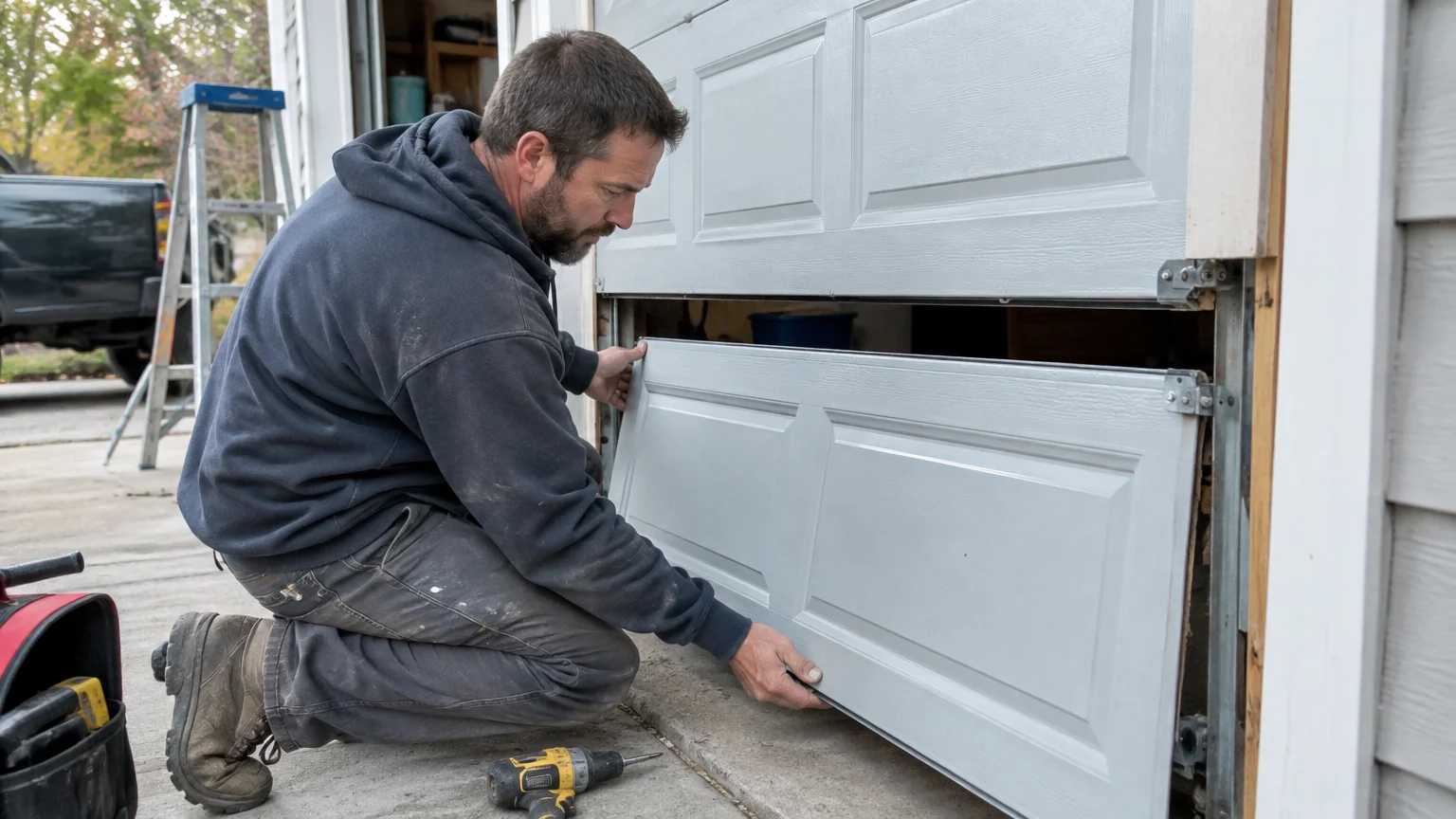
How to replace garage door panel work is usually a professional job, not a simple home repair. The door must be supported, the old section separated, and the new section lined up with the tracks and hardware. The exact work changes by door type and maker.
What the replacement process involves
A technician first checks the door, finds the correct panel, and looks for hidden damage. The opener is made safe before work starts. The damaged section is then removed while the door is held in a controlled way.
The replacement panel must line up with the sections above and below it. Hinges, rollers, brackets, seals, and other hardware may need to be moved or changed. The technician then checks travel, balance, movement, and response before the door returns to normal use.
The work may reveal damage behind the panel. A bent track, broken hinge, loose roller, or damaged cable can stop the door from working safely. Changing only the visible panel may not fix the real problem.
Why panel replacement is usually not a DIY project
A homeowner does not need a professional for simple visual checks, cleaning, or keeping the area around the door clear. You may wipe dirt from photo-eye lenses and check that nothing blocks the door’s path. Do these tasks with the door still, and never adjust loaded hardware.
Torsion springs, extension springs, lift cables, and bottom brackets can hold dangerous force. They should not be removed, adjusted, or changed without the right tools and training. A mistake can cause serious injury, damage the door, or release it without warning.
Do not try to lift a heavy damaged door, remove cables, or take apart spring hardware. A trained garage door repair professional can control the risk and find related faults before the door is used again. This is an important part of garage door safety.
Can a new garage door panel match the existing door?
A new panel can sometimes match the existing door closely, but an exact visual match is not guaranteed. Age, sunlight, weather, paint, texture, windows, and discontinued designs can affect the result. The best match starts with the door’s brand, model, measurements, and panel style.
Why age, color, and weathering matter
A replacement panel has a fresh finish. Older sections may have faded, darkened, or lost some surface texture. Even the same color can look different after years of sun and weather.
A close match may be enough for a practical repair. Some owners may prefer a complete replacement when the front of the home needs a uniform look. Business owners may also consider how the door appears to customers, tenants, and visitors.
The panel’s windows and decorative parts must match as well. A section with a different window shape can make the door look uneven. The replacement must also have the right insulation thickness and connection points.
How short-panel and long-panel designs affect matching
Short-panel and long-panel doors use different section layouts. A short-panel design has more, smaller sections across the front. A long-panel design has fewer, wider sections. A replacement must match the current layout, not only the full door width.
Mixing these designs can make the door look uneven and may affect hinge alignment. A technician can identify the pattern and check whether the needed section is still available. Photos, model labels, and measurements can help, but they do not replace an in-person check.
When is replacing the entire garage door better than replacing one panel?
Replacing the full garage door may be better when several sections are damaged, the door is badly worn, or a matching panel cannot be found. It may also make sense when the current hardware has repeated faults. The right choice depends on safety, condition, fit, appearance, and future use.
Signs the door has reached the end of its service life
A full replacement deserves thought when the door has rust, cracks, sagging, repeated off-track problems, or wide wear. Frequent repairs may show that the door and its hardware no longer work as one safe system. A damaged panel can expose these older problems.
Other warning signs include loud movement, uneven travel, loose hinges, worn rollers, and a door that does not stay in place during a professional check. Broken springs and cables also need trained attention. These parts should never be adjusted by a homeowner.
How insulation, style, and hardware influence the choice
A new door may offer better insulation, updated windows, stronger seals, and a different style. It may also work with a newer opener and current safety features. However, a full replacement is not always needed after one impact.
The best choice compares the condition of every major part. An opener may need repair while the door itself remains sound. In other cases, a new door without suitable hardware can create new problems. Garage Door Installation can help when a complete change is the safer path.
The final recommendation should reflect the door’s condition and the owner’s goals. A panel replacement is often the simpler repair when the rest of the system remains reliable. A complete replacement may be more practical when damage and wear affect many parts.
What else should be checked after a garage door panel is damaged?
A damaged panel can hide problems in the rest of the door. The tracks, rollers, hinges, brackets, springs, cables, and opener should be checked before normal use resumes. The goal is to restore smooth movement, not only improve the panel’s look.
Tracks, rollers, hinges, and brackets
An impact can bend a vertical track or push a roller out of place. A broken hinge can make the sections separate or bind during movement. Loose brackets can also change how the door carries its weight.
A homeowner can look for bent metal, loose parts, and rollers sitting outside the track. Do not straighten tracks, remove hinges, or move the door with force. Garage Door Off Track Repair may be needed when the rollers no longer sit safely in the track.
Cleaning the door area is safe upkeep. Keep dirt, toys, tools, and stored items away from the door’s path. Keep people and pets clear while the door is moving.
Springs, cables, and opener alignment
Springs and cables help lift and control the door. They hold stored force and can cause serious injury if handled without training. A technician should inspect them after an impact, especially when the door feels heavy, crooked, or hard to move.
The opener also needs attention after a panel change. Its arm, sensors, travel, and connection to the door must work together. A damaged door can make the opener strain, stop early, or reverse for the wrong reason. Garage Door Opener Repair may be needed when the opening system no longer moves the door correctly.
Stop using the door if it falls, jams, reverses without reason, or makes a sharp popping sound. Prompt help can protect people, vehicles, and the building.
How can you choose the right solution for a damaged garage door?
The right choice starts with a safety check and a clear look at the whole door. Ask whether the damage is limited, whether a matching panel is available, and whether the hardware remains reliable. A written quote should confirm the final work and total cost before work begins.
Questions to ask before approving panel replacement
A homeowner or property manager should ask:
- Is the damaged panel the only part that needs attention?
- Can the replacement match the design, windows, finish, and insulation?
- Are the tracks, rollers, hinges, brackets, springs, and cables safe?
- Will the opener need testing, adjustment, or repair?
- Would a complete door replacement be more practical for this door?
These questions help prevent a cosmetic fix from hiding a safety fault. They also help owners compare a short-term repair with a longer-term solution. Portsmouth Garage Door Repair can help homeowners, businesses, and property owners understand the choices without guessing from visible damage alone.
Key takeaways for restoring safe, reliable operation
- One panel can often be replaced when the remaining door is sound.
- A close color match may not be exact on an older door.
- Short-panel and long-panel designs should not be mixed without review.
- Springs, cables, bottom brackets, and loaded hardware need trained service.
- A full door replacement may be better when damage and wear affect many parts.
Frequently Asked Questions
Can garage door panels be replaced individually?
Yes. Many sectional garage doors allow one damaged panel to be replaced. The new section must match the door’s size, design, thickness, windows, and hinge layout. A technician should inspect the full door first because an impact can also damage tracks, rollers, cables, brackets, or the opener.
How long does a replacement garage door panel last?
A replacement panel can last for many years when it matches the door and the hardware stays in good condition. Its life depends on weather, use, maintenance, installation quality, and impact risk. A panel cannot fix a worn track, weak garage door spring, or damaged opener.
Can a homeowner replace a garage door panel?
A homeowner can safely inspect the closed door, clear its path, and clean photo-eye lenses. Panel removal is usually not a safe DIY task. The door is heavy, and springs, cables, brackets, and hinges may hold stored force. Trained service is the safer choice for replacement work.
Is it better to replace the whole garage door after an impact?
Not always. One-panel replacement may suit a door that is straight, safe, and supported by available parts. A full replacement may be better when several sections are damaged, the door is old and worn, or no close panel match exists.
Who repairs garage doors near me?
Local garage door repair companies may handle damaged panels, off-track doors, rollers, hinges, cables, and openers. Choose a provider that explains the safety risks, checks the full system, and confirms the recommended work in a quote. Portsmouth Garage Door Repair serves Portsmouth, including West End and South End, as well as New Castle, Eliot, Rye, Stratham, and nearby communities.
Conclusion
A single damaged panel does not always mean the entire garage door must be replaced. The best choice depends on the panel’s condition, the door’s age, the available match, and the health of the tracks and hardware. Homeowners can make safe visual checks, but panel removal and loaded hardware work should be left to trained professionals.
For Portsmouth homeowners, businesses, and property owners, a damaged door can quickly become a security or safety concern. When a door is stuck, unsafe, or leaving a home or business exposed, act quickly. Contact us today to discuss panel replacement or a complete door solution.