Garage Door Off Track Repair in Portsmouth, NH
The door is braced first, guided back into the channel and re-hung on straight rail with healthy wheels, and the thing that pushed it out gets corrected so the problem doesn't repeat.
A door in Portsmouth is off track when wheels have jumped the rail, the panels sit at a tilt or jam, or a section bulges where it snagged. Leave it alone, keep the opener switched off, and don't try to force it.
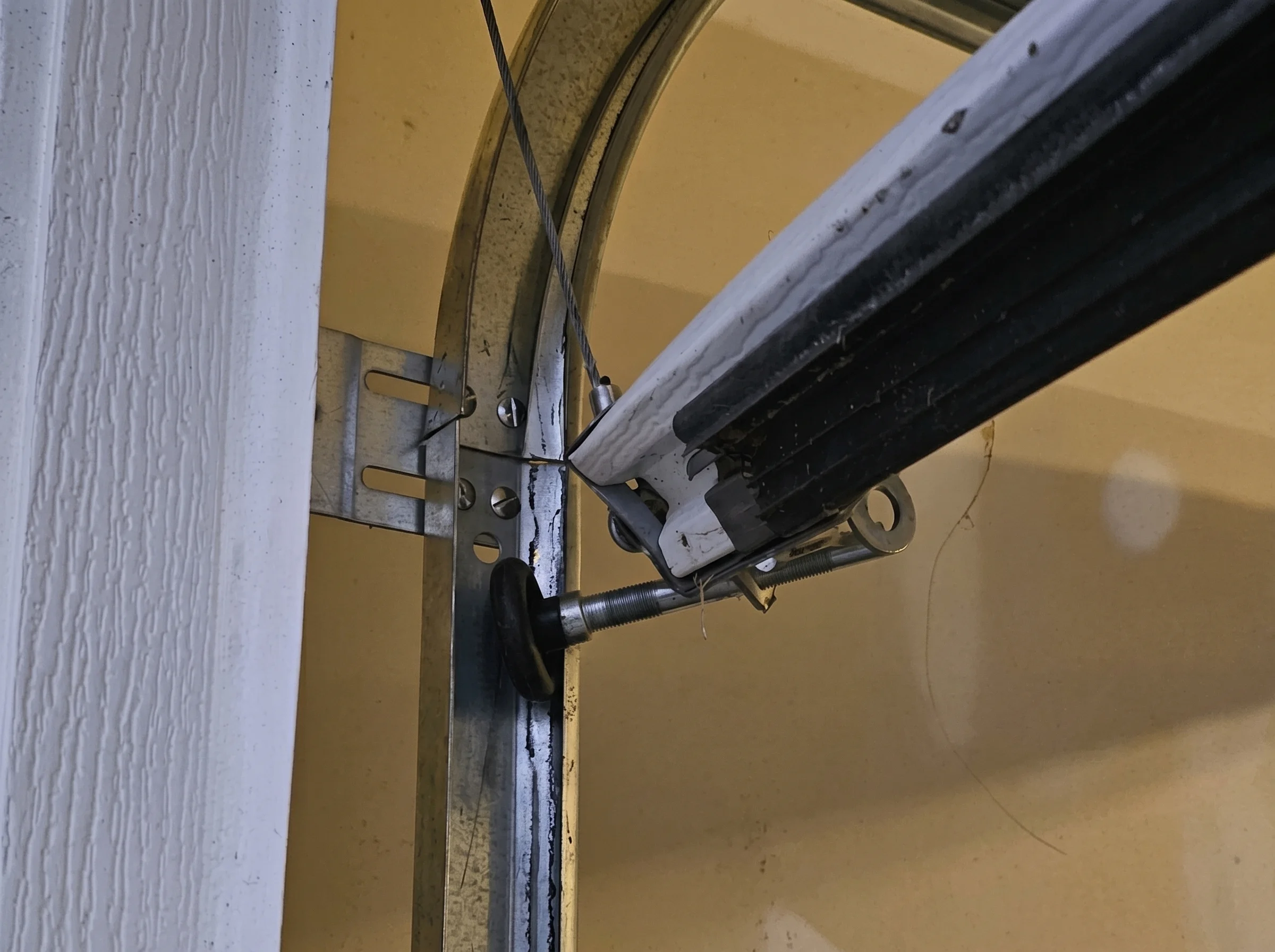
How to recognize a derailed door
A wheel or two resting outside the rail, most often low on the door or where the track bends up toward the ceiling, with the panel sagging.
Panels cocked or wedged, frequently halfway up.
A panel bulging or creased from the motor pushing on a door that was stuck.
A rail clearly bent, dented or pulling off the wall.
Grinding, popping or scraping heard just prior to the derailment.
Door has left its channel? Keep the opener off and report which side let go and what preceded it.
Contact UsWhat knocks a door off track
A bumper strike
Backing into the door is the top cause, likelier on Portsmouth's 65 inches of yearly snow, and it often bends the lower rail.
A cable that parted or slid
A dropped corner racks the door and pops wheels free. For a loose cable, the cable repair page explains that half of the problem.
Worn-out rollers
A roller whose bearing seized scrapes rather than spins, and escapes the rail at the first rough patch.
Slack or bent rail
Bracket screws back out over years of vibration, and once the rail spreads, wheels slip free; Portsmouth's average January low is 16°F.
An obstruction below
A bin, bicycle or lawn mower snagged beneath a descending door, more so when the closing force is set high.
Secure the area
Leave the opener off
It keeps driving the door, which can crush panels or rip the rail off the wall.
Don't use the emergency release on a door that is half open and off its rail. It could fall, or swing right out of the track.
Don't tap the wheels back in while the door is loaded. A derailed door keeps its spring tension and can lurch at any moment, so leave it hanging as it is.
Stay out from under the door, and if a vehicle is trapped, say so when you call or write.
What the work includes
The door is clamped or propped so nothing can drop or slide during the work, and spring tension is handled as needed.
Damage gets assessed
Which wheels came out, how much rail is damaged, any bent panels, and whether a cable or spring set it off.
Rail gets trued or swapped
Slight bends can be straightened, but creased or ripped rail is replaced.
Worn or broken wheels are changed, and hinges are inspected, because a cracked hinge can throw another roller out.
The door is lifted back into the rails, brackets are snugged up, and it is cycled start to finish on the opener. Force and travel settings are verified at the end.
Describe what went wrong
A line or two will do for a start, and which part is damaged is something you can leave to us.
Roller types
How quiet and smooth a door runs depends largely on its rollers, and they give out well ahead of the door itself.
Plain steel rollers with no bearings are the simplest type: loud, and hard on the rail as well as on themselves.
Nylon wheels on sealed bearings roll much more quietly and ask for little or no oiling.
Wobble, flat spots, cracks or seized bearings all mean a roller is due for replacement.
Loud but intact? New rollers often cure it at a maintenance visit; the Portsmouth Inspection Department lists door repairs as ordinary repairs.
What shapes the off-track repair bill
How much came loose
Two wheels out at one corner, or a door hanging free.
Rail damage
Whether rail is straightened or replaced, on one side or both.
Wheels and hinges that have to be changed.
Warped or split panels
A heavily bowed panel could need replacing, and an older door's panel is not always easy to match.
A spring or cable that gave out first, setting it off.
When a panel is too far gone
After a hard knock, some panels are bent past the point of straightening. One panel can often be swapped while the remainder stays, provided the manufacturer still produces a matching one.
If it doesn't, or if many panels are hurt, garage door installation covers the replacement choices.
Quick answers
Is it okay to reseat a wheel in the track by hand?
Only if one low roller slipped out of a closed door and the track and cables are fine. Beyond that, stop: the door is heavy, holds spring tension and can move suddenly, without any warning, when you least expect it to.
What makes it fall out on one side again and again?
Usually a rail bent a little out of line, a slack bracket, or a cable on that side needing adjustment. Rehanging the door without correcting the cause means a second derailment is waiting.
Do the rails need oil?
No. Rails should stay clean and dry, since oil there picks up grit. Lubricant belongs on roller bearings, hinges and springs.
More garage door help
Garage Door Cable Repair
Cables that fray, snap or slide off, and doors that lean to one side.
Read more →Garage Door Spring Repair
Torsion or extension springs that gave way, replaced with the right size for the door.
Read more →Garage Door Installation
Replacement doors in steel, timber, composite or glass, made to fit the opening.
Read more →Reach out
Say where the door stopped (shut, open or in between), which side jumped, whether anything struck it, and if a cable looks slack.
A picture of each side taken from a few feet away is the most helpful thing to attach.