A garage door tune up checks the door, opener, safety parts, and moving hardware. It can quiet noisy movement, find wear early, and help the door work safely. Homeowners can handle simple cleaning and visual checks. Spring, cable, and bracket work should be left to a trained garage door repair professional.
Table of Contents
- What is included in a garage door tune-up?
- Why is my garage door making so much noise?
- Which garage door parts need lubrication?
- How does a tune-up improve garage door safety?
- How often should a garage door receive maintenance?
- Can a tune-up prevent common garage door problems?
- When should you schedule a professional garage door tune-up?
- Frequently Asked Questions
- Conclusion
What is included in a garage door tune-up?
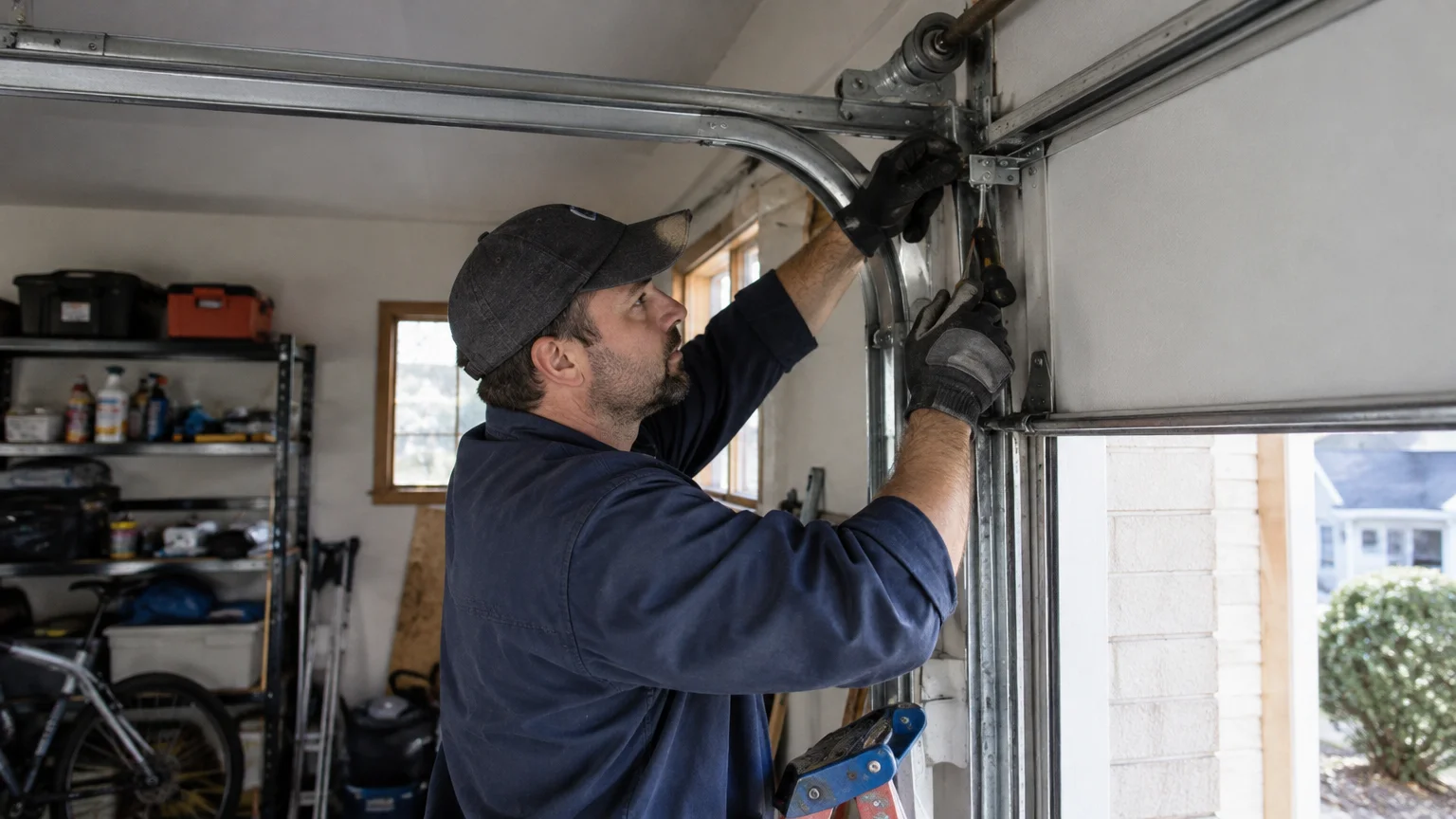
A garage door tune-up is a planned check of the door and its parts. It helps find wear before a small fault becomes a sudden failure. The visit may include cleaning, lubrication, safety tests, balance checks, and an opener review.
Visual inspection and safety checks
The technician checks the panels, tracks, hinges, rollers, cables, springs, brackets, and opener. A visual inspection means looking for damage, rust, loose hardware, bends, and odd wear. This check does not replace a repair when a part is broken.
The technician may also check the door’s safety sensors. These small photo eyes sit near the floor on both sides. They should face each other and stay free of dirt or stored items. The opener should also respond to its wall control and remote.
A tune-up may include tightening safe, reachable hardware. It may also include cleaning dust from key areas and checking the weather seal. A garage door seal along the bottom and sides keeps out light, air, water, and pests. A worn seal may need adjustment, repair, or replacement.
Testing the door’s balance and movement
The door should move smoothly without shaking, dragging, or leaning. Balance testing checks how well the spring system supports the door’s weight. A door that feels heavy, drops fast, or rises unevenly may have a spring or cable fault.
Homeowners should not remove spring tension or adjust spring hardware. Torsion springs and extension springs store strong force. If that force releases, it can cause serious injury or damage. A trained professional has the tools and skills for this work.
Why is my garage door making so much noise?
A noisy garage door may need cleaning, lubrication, adjustment, or a closer check. Squeaks can come from dry hinges or rollers. Rattles may come from loose hardware. Grinding, popping, or scraping can point to worn parts or poor movement.
Common causes of squeaks, rattles, and grinding
Squeaks often start when moving metal parts lose lubrication. Dust can also gather around rollers, hinges, and tracks. Rattling may come from loose nuts, bolts, brackets, or a vibrating opener. A small sound can grow as parts wear.
Grinding needs more care. It may mean a roller is damaged, a track is bent, or the door is rubbing on something. A loud pop may point to a spring or cable fault. Scraping may mean the door is off track or no longer level.
A homeowner can listen from a safe place while the door moves. Keep the area clear during this test. Children and pets should stay away from the door and its path.
When unusual sounds point to a developing repair
Noise matters more when it comes with another change. Slow movement, shaking, jerking, gaps near the tracks, or early stops may need service. The opener may run longer when the door becomes heavy or hard to move.
Garage Door Opener Repair may be needed when the motor clicks, hums, strains, or does not respond. Garage Door Off Track Repair may be needed when rollers leave the track or the door hangs at an angle. Do not force these problems back into place by hand.
Portsmouth Garage Door Repair helps Portsmouth homeowners understand whether a noisy door needs simple care or a repair. Clear advice helps the owner choose a safe next step.
Which garage door parts need lubrication?
Hinges, rollers, springs, and bearings may need the right lubricant. Lubrication lowers friction between moving surfaces. It does not fix a cracked roller, broken spring, bent track, or loose bracket.
Hinges, rollers, springs, and bearings
Hinges join the door sections and move as the door bends. Rollers travel inside the tracks and may have sealed bearings. Springs help lift the door, while bearings help parts move smoothly. Each part needs a careful check before a product is used.
Tracks usually need cleaning, not heavy lubrication. Thick grease can trap dust and make movement worse. The door should not be covered in a way that makes rollers slip or collect grit.
A homeowner can wipe loose dirt from safe, reachable surfaces. Unplug the opener before cleaning near its moving parts. Keep the door still, and never reach between panels, rollers, springs, or cables.
Choosing the right lubricant and applying it safely
A lubricant made for garage doors is often better than thick household grease. Follow the product label. Some sprays attract dirt or are not made for garage hardware. The goal is a light coating on suitable parts, not a wet or dripping surface.
Homeowners should not spray springs, cables, or brackets while touching or moving them. These parts may hold dangerous tension. A professional can check the hardware first and decide if lubrication is safe.
After simple care, watch the door for smooth movement and new sounds. If noise remains, dry hardware may not be the cause. The problem may involve balance, alignment, bearings, the opener, or a damaged part.
How does a tune-up improve garage door safety?
A tune-up improves garage door safety by checking movement, sensors, the reversing system, and visible hardware. It can find parts that are loose, worn, bent, or damaged. Lubrication alone cannot make an unsafe door safe.
Checking the reversing mechanism and photo eyes
The reversing system should react when the door meets an object in its path. The photo eyes should detect an interruption and tell the opener to stop or reverse. Dirt, poor alignment, wiring trouble, or a failed sensor can stop this response.
A technician checks the opener controls and watches the door move. Keep the opening clear during testing. People, cars, toys, and stored items should not block the door or sit beneath it.
Never disable safety sensors to make a door close. Do not change opener force or travel settings without knowing the correct process. Wrong settings can increase risk and hide a mechanical fault.
Identifying worn or damaged components
A tune-up may reveal frayed cables, cracked rollers, bent tracks, worn hinges, loose brackets, or weak seals. It may also show that a spring no longer supports the door well. These findings help the owner plan the right repair before the door stops working.
Garage Door Cable Repair is different from routine lubrication. Lift cables carry heavy loads and may move suddenly when damaged. Bottom brackets connect to high-tension parts and should not be removed by a homeowner.
The same care matters for homes, shops, rentals, and shared buildings. A door that serves a business can affect access and security. Portsmouth Garage Door Repair offers repair guidance for properties and nearby areas.
How often should a garage door receive maintenance?
Many garage doors benefit from a yearly maintenance review. Doors that work many times each day may need attention sooner. The right schedule depends on use, age, weather, dirt, moisture, and past repairs.
A tune-up should happen sooner when the door becomes noisy, slow, uneven, or hard to control. Coastal air, storms, heat, and dust can affect metal parts and seals. Older doors may also need closer checks.
Factors that affect the ideal maintenance schedule
A door used often may wear faster than one used less often. Older rollers, hinges, cables, springs, and seals have had more time to wear. Commercial doors and shared property doors may face even more daily strain.
Property owners can keep notes about noise, movement, sensor response, and repairs. These notes can help show changes over time. A clear maintenance plan may also help businesses avoid sudden access problems.
Homeowners can keep the area clear, remove visible dirt, and watch for loose parts. They can also listen for changes in sound. They should not adjust springs, cables, bottom brackets, or other parts under tension.
Warning signs that the door needs attention sooner
A door may need prompt service when it shows any of these signs:
- It opens unevenly, shakes, jerks, or stops before reaching the floor.
- It makes grinding, popping, scraping, or repeated loud rattling sounds.
- A spring looks broken, a cable looks frayed, or a roller leaves its track.
- The opener hums, clicks, strains, or does not respond to controls.
- The door feels very heavy or will not stay open safely.
A door stuck closed can create an access problem. A door stuck open can create a security concern. Keep people away from the system and arrange trained help.
Can a tune-up prevent common garage door problems?
A tune-up can reduce strain and find many problems early. It may help the door move more smoothly and help the opener work under a normal load. It cannot stop every spring failure, storm impact, cable break, or worn-out part.
Reducing strain on springs, cables, and the opener
A balanced door places less stress on the opener. Clean rollers and sound hinges can help the door move with less drag. Proper track alignment can also support steady movement. These checks may reduce wear, but they do not replace damaged parts.
The opener is made to move a balanced door. When a door becomes heavy, the motor may work harder and run longer. This strain can lead to poor performance or opener failure. Garage Door Opener Repair may be right when the motor or controls show trouble.
A tune-up can find early signs of trouble in cables and springs. The technician may recommend Garage Door Cable Repair or another repair when a part is unsafe. Do not keep using the door only because it still opens.
What maintenance cannot fix on its own
Routine care cannot straighten a badly bent track or rebuild a damaged opener. It cannot safely restore a broken spring or frayed cable. It also cannot correct major panel damage or a door that has fallen off its tracks.
Painting is another task that needs care. The surface should be clean, dry, and sound first. Paint should not cover moving hardware, rollers, springs, sensors, or track surfaces. A technician can help separate cosmetic work from repair needs.
When a tune-up finds a larger problem, ask for a clear explanation before work starts. The final cost depends on the parts, door size, access, damage, and urgency. The final cost is confirmed on a quote.
When should you schedule a professional garage door tune-up?
A professional tune-up is wise when the door is noisy, uneven, heavy, or unreliable. It is also helpful before a small issue becomes a blocked opening or safety hazard. A local garage door repair team can inspect the system and explain what needs attention.
Situations that require trained service
Professional service is needed for broken springs, loose or frayed cables, damaged bottom brackets, bent tracks, and doors that have fallen off track. It is also needed when the door will not reverse, the opener cannot lift it, or the system shows electrical trouble.
Homeowners do not need a professional for every task. They can keep the opening clear, wipe reachable surfaces, check for dirt on photo eyes, and note unusual sounds. They should stop and seek trained help when a check involves spring force, lift cables, brackets, or heavy door sections.
When someone searches for garage door repair services near me, the best choice is a provider that explains the problem clearly and works safely. Portsmouth Garage Door Repair can help property owners review repair and upkeep needs without guessing.
What to expect during a professional visit
The technician usually starts by asking about the door’s symptoms and use. The visit may include a visual check, movement test, balance review, sensor check, opener check, and safe lubrication. The technician should explain unsafe findings before work begins.
The owner may receive options based on urgency and condition. A small upkeep need may be separate from a repair that affects safety. If a larger fix is needed, the final cost is confirmed on a quote before approval.
A professional tune-up cannot promise that every future failure will be avoided. It gives the owner a clearer view of the system and helps address risks sooner. This can protect access, security, and daily use for a home or business.
Key Takeaways
- A garage door tune up checks movement, balance, safety parts, hardware, and the opener.
- Homeowners can handle simple cleaning and visual checks, but not spring or cable work.
- Noise, shaking, heavy movement, and slow operation can signal a developing repair.
- The right lubricant helps suitable moving parts, but cannot repair damaged hardware.
- Professional service is wise when the door becomes unsafe, unreliable, or hard to move.
Frequently Asked Questions
Is a garage door tune-up worth it?
A tune-up can help when a door is noisy, slow, uneven, or used often. It may find worn parts before they cause sudden failure. It cannot prevent every breakdown, but it gives the owner a clearer view of safety, movement, and repair needs.
Can a homeowner lubricate a garage door?
A homeowner can often use a suitable garage door lubricant on safe, reachable moving parts. The door should stay still during the work. Springs, cables, bottom brackets, and other tension parts should not be handled. A professional should inspect those parts instead.
What is the best lubricant for garage doors?
The best choice is usually a product made for garage door hardware. Use it according to the label. Thick grease may collect dust and should not cover tracks. Lubrication will not solve grinding, broken parts, poor balance, or an off-track door.
Who services garage doors near me?
A local garage door repair company can inspect residential, commercial, and rental property doors. Look for clear explanations, safe work, and experience with the needed repair. Portsmouth Garage Door Repair serves property owners and can help identify the next step.
How can someone fix a noisy garage door?
Safe first checks include clearing the opening, listening for the source, and looking for visible dirt or damage. A technician may clean, lubricate, align, tighten, or replace parts. Grinding, popping, heavy movement, and cable or spring damage need professional attention.
Conclusion
A garage door tune-up covers more than spraying lubricant on a noisy door. It reviews balance, movement, safety sensors, the opener, visible hardware, and signs of wear. Simple upkeep can be done at home, but parts under tension need trained service.
For homeowners and property owners in Portsmouth, early attention can help protect access and security. Contact us today to schedule a professional garage door tune-up with Portsmouth Garage Door Repair.